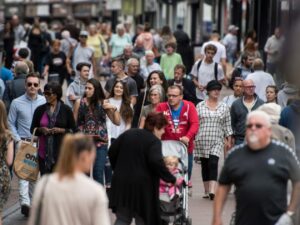
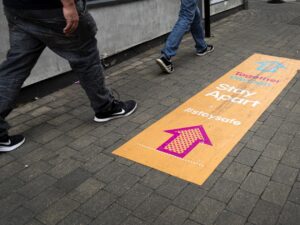
The Covid-19 pandemic has been portrayed as a time when communities have become closer and when neighbours helped each other, but new research from the University of Essex and Manchester University suggests that in reality neighbourhoods have become more fractured during the lockdown.
Each year Understanding Society supports a number of doctoral research studentships. Apply now for entry in 2021.
New research has highlighted that 74% of independent school pupils benefitted from full school days in April compared to just 38% of state school children.
We’re looking for members to sit on our new Strategic Oversight Board to help guide Understanding Society into the future. Could you help us develop the Study?
Working class women have borne the brunt of the cuts to working hours as almost half of working class women (43%) did no hours of work in April compared to just 20% of women in professional or managerial roles.
New publication offers insights, ideas and challenges for mobilising data and evidence
Wave 4 of the COVID-19 study is now available to download.
Half of free school meal eligible children could not access the scheme in April 2020 and this was associated with more food bank use, according to the latest research.
The Office for National Statistics (ONS) has released a new statistical bulletin on the views and wellbeing of young people aged 16 to 24 years in the UK prior to the coronavirus (COVID-19) pandemic.
A new report suggests there has been a large increase in the proportion of people living in deep poverty (that is, more than 50% below the poverty line) and they are being significantly impacted by COVID-19.
Analysis of the Understanding Society COVID-19 survey shows an increase in psychological distress and more binge drinking during coronavirus lockdown.
Many researchers have quoted midlife as the worst time for personal wellbeing but new research has found the biggest decrease in life satisfaction is actually during adolescence.
The CLOSER consortium which brings longitudinal studies together, including Understanding Society, will be expanding its portfolio this month.
Nine out of 10 people in the UK who have worked from home during lockdown want to continue doing so, according to research.
The 2020 Good Childhood Report shows that children's happiness continues to fall.
New research from the University of Essex and the London School of Economics has looked in detail at neighbourhood communication during the coronavirus lockdown and found that ethnic minority communities reported less neighbourhood interaction than majority White British communities.
Women, young children, key workers and BAME groups are stuggling with sleep during the coronavirus lockdown.
Researchers can now access COVID-19 Special Licence datasets.
Data from Wave 3 of the Understanding Society COVID-19 survey is now available.
New research has found that life after divorce appears to be easier for childless older adults than for those who are parents.
Sign up to our newsletter
The Economic and Social Research Council is the primary funder of the study The Study is led by a team at the Institute for Social and Economic Research (ISER) at the University of Essex.