Showing News articles for: Income and expenditure View all News
A new edition of the Understanding Society Waves 1 - 7 dataset has been released today.
The UK’s gender pay gap is gradually narrowing - but women still have some way to go to match the earning level of their male counterparts, according to a new report published by the Department for Education.
People act less ‘green’ when they feel they don’t have a good work-life balance, according to new research using Understanding Society data.
The Joseph Rowntree Foundation used Understanding Society to measure poverty rates and trends across Wales.
For the first time in the Study’s history, data from the British Household Panel Survey (BHPS) has been harmonised with Understanding Society to create 25 years of longitudinal data.
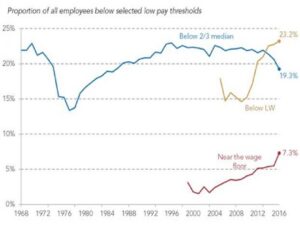
Impact Fellow Raj Patel on the discussion from Insights 2017 on how should we tackle low pay and insecure work.
Understanding Society has published its sixth Insights report, providing new findings for researchers and policy makers on the changes and stability in the lives of people in the UK.
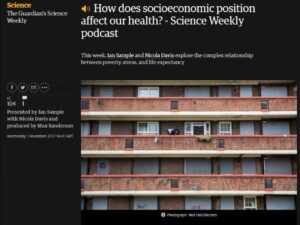
Meena Kumari, Professor of Biological and Social Epidemiology discusses her pioneering work combining biological markers from blood samples with the socio-economic longitudinal data collected from participants in Understanding Society, in a new podcast for The Guardian’s Science Weekly series.
Around one in four retirees in the UK return to work or ‘unretire’, mostly within five years of retiring, according to research that uses longitudinal data from the British Household Panel Survey and Understanding Society.
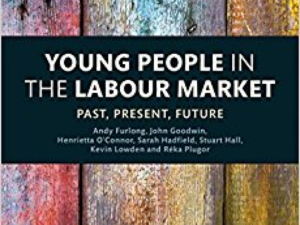
A new publication uses Understanding Society’s data to focus on young people and the ways in which their working lives have changed between the 1980s recession and the Great Recession of 2008/2009 and its immediate aftermath.
The Guardian has published an indepth feature on new research which uses Understanding Society’s biomarker data.
The Scottish county, East Dunbartonshire has been recognised as the top location to live in the UK if you’re a woman, according to new academic research.
Flexibility in the workplace could be a key to helping women maintain their career trajectory after having children, new research using Understanding Society data suggests
Sign up to our newsletter
The Economic and Social Research Council is the primary funder of the study The Study is led by a team at the Institute for Social and Economic Research (ISER) at the University of Essex.