Two charities will receive support through Understanding Society’s Research Voucher Scheme, which provides research guidance for policy relevant projects that use the Study’s data.
Using five years of longitudinal data from Understanding Society, a new study has considered what affects 16-25 year olds’ chances of finding employment after leaving education.
The UK’s gender pay gap is gradually narrowing - but women still have some way to go to match the earning level of their male counterparts, according to a new report published by the Department for Education.
A new report which was developed using data from Understanding Society has found that participating in creative and cultural activities maintains our wellbeing as we get older.
Who uses them? What impact do they have? And how can they develop for the future?
People act less ‘green’ when they feel they don’t have a good work-life balance, according to new research using Understanding Society data.
The Joseph Rowntree Foundation used Understanding Society to measure poverty rates and trends across Wales.
Young adults in the UK are now driving less than their counterparts in the early 1990s, according to a report commissioned by the Department for Transport.
The home of Understanding Society, the Institute for Social and Economic Research at the University of Essex, has been recognised for its world-leading social science research.
Understanding Society is inviting innovative research ideas from third sector organisations that help further their mission and drive social change through the development of a research base to inform policy, support social innovation or improve services.
Understanding Society welcomes applications from students with an interest in studying the relationship between demographic change and poverty and inequality for its new PhD studentship, starting in September 2018.
The organising committee of the Second International Conference on the Methodology of Longitudinal Surveys (MOLS2) invites submissions for a Student Paper Award.
A new report commissioned by CLOSER considers the impact and opportunities of new technology on data collection.
For the first time in the Study’s history, data from the British Household Panel Survey (BHPS) has been harmonised with Understanding Society to create 25 years of longitudinal data.
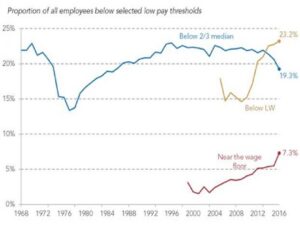
Impact Fellow Raj Patel on the discussion from Insights 2017 on how should we tackle low pay and insecure work.
Understanding Society has released two new case studies which show how longitudinal research using household data is being used by the Department for Work and Pensions to tackle work-based issues in the UK.
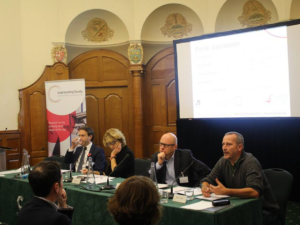
Understanding Society’s Insights 2017 report was launched with a debate on the topic of low pay in the UK.
Understanding Society has published its sixth Insights report, providing new findings for researchers and policy makers on the changes and stability in the lives of people in the UK.
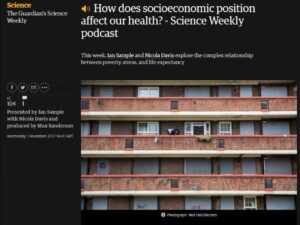
Meena Kumari, Professor of Biological and Social Epidemiology discusses her pioneering work combining biological markers from blood samples with the socio-economic longitudinal data collected from participants in Understanding Society, in a new podcast for The Guardian’s Science Weekly series.
Sign up to our newsletter
The Economic and Social Research Council is the primary funder of the study The Study is led by a team at the Institute for Social and Economic Research (ISER) at the University of Essex.