Impact
The findings were communicated to policy-makers from the Department for Transport, Department of Health, Public Health England and a range of Local Authorities as part of a policy seminar organised by NatCen and the ESRC International Centre for Lifecourse Studies.
Understanding Society submitted written evidence to the House of Commons Select Committee on Active Travel using the findings from this research and others on the topic.
The findings also received interest from third sector organisations, such as Sustrans and Living Streets, and media coverage.
The work also fed into an application for an MRC Postdoctoral Strategic Skills Fellowship in Population Health to investigate the topic in more detail. This was awarded to Dr Ellen
Flint and commenced in September 2014.
Findings from the research
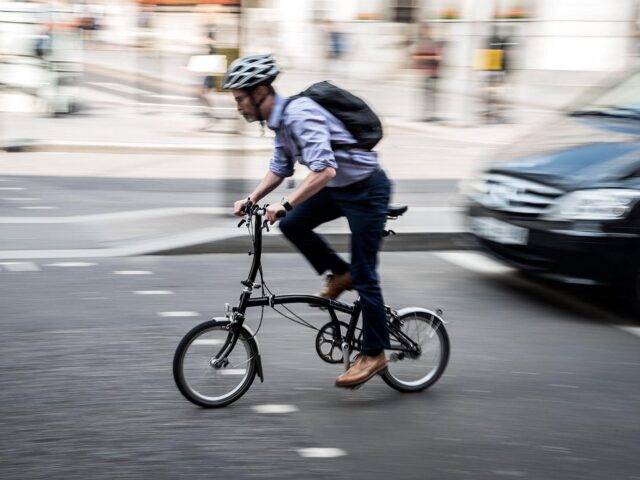
Commuting by public and active transport significantly and independently predicted lower BMI and percentage body fat, compared to commuting by private transport. Men who commuted via public or active modes had BMI scores around 1 point lower than those who used private transport, equating to a difference in weight of 3kg (almost half a stone) for the average man. Women who commuted via public or active transport had BMI scores around 0.7 points lower than their private transport using counterparts, equating to a difference in weight of 2.5kg (5.5lb) for the average woman.
Further information
Further information on the research can be accessed at the British Medical Online Journal (BMJ).
Media coverage of the research can be accessed from the following sources:
- The Telegraph: “Ditch the car and lose half a stone – research shows public transport linked to lower BMI.”
- The Independent: “Why commuting to work doesn’t mean your health has to go down the tube.”
- Mail on Sunday: “Want to shed half a stone? Ditch the car and take public transport to work instead.”
- Reuters: “Walking, biking and taking public transit tied to lower weight.”
Understanding Society written evidence submitted to the House of Commons Select Committee on Active Travel is available here.
Biomarkers, genetics and epigeneticsHealth and wellbeingTransport and environment